
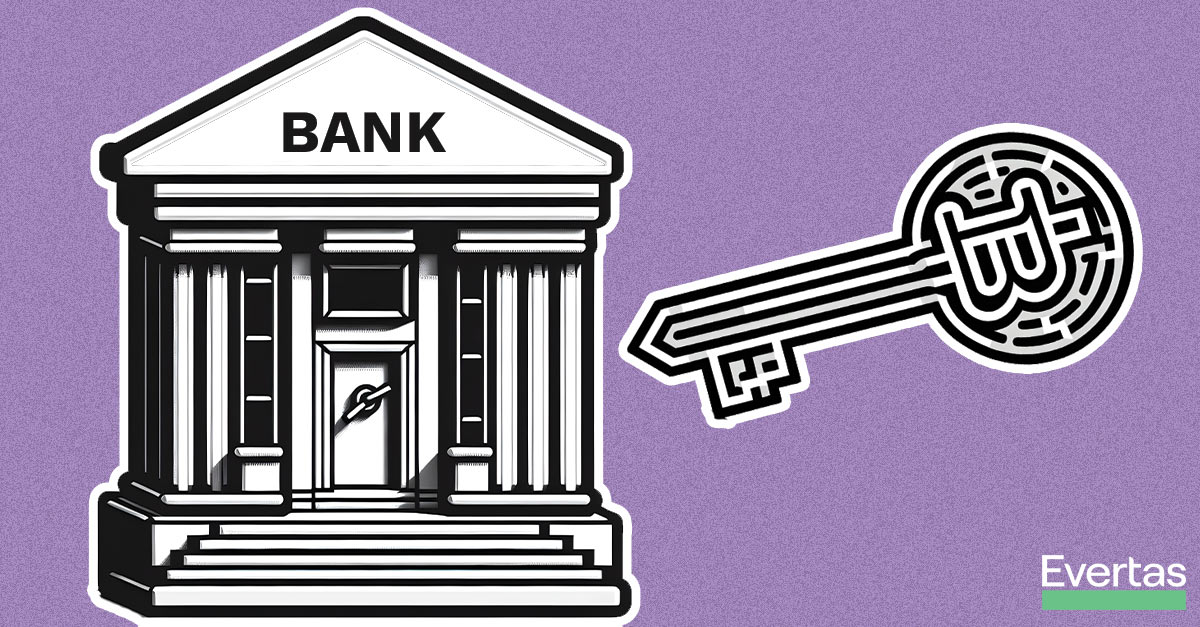
Cryptocurrencies are increasingly viewed as a tool for addressing financial inclusion, especially for the unbanked and underbanked populations. These digital assets offer access to financial services without relying on traditional banking infrastructures.
Barriers in Traditional Banking
In many parts of the world, access to financial services is limited due to infrastructure gaps, financial illiteracy, or unstable economies. Temasek’s recent report on the future of Southeast Asia’s digital financial services stated that, “More than 70% of the adult population (of Southeast Asia) either ‘underbanked’ or ‘unbanked,’ with limited access to financial services.” Further, about 78% of the global population has access to mobile phones according to the International Telecommunication Union (ITU). Many of these mobile devices are connecting individuals through applications such as WhatsApp, Venmo, PayPal, AliPay, CashApp, Telegram, and others. This decentralization of value exchange on third party applications enables individuals with a cell phone to engage in commerce within these “walled gardens” of social platforms. In 2024, it seems clear that mobile phones have become a conduit for financial inclusion even with third party applications that can act as central authorities for value transactions.
How Cryptocurrencies Offer Solutions
Cryptocurrencies operate on decentralized technology, providing fast, secure transactions without the need for brick-and-mortar banks. This makes it possible to serve the unbanked through digital means, opening financial services to vast populations. Whether through a basic smartphone or a simple internet connection, people can send, receive, and store money securely, bypassing traditional financial barriers without a central party censoring or controlling their transactions. Coupling crypto with a mobile phone delivery system for users should enhance the rate of adoption for crypto as it can enable those users to exchange value, globally, outside of the “walled gardens” of commerce provided by third party applications.
BitPesa: A Real-World Example
One notable example is BitPesa, a company that uses Bitcoin to enable affordable cross-border transactions across Africa. David Hamilton says for Securities.io:
“BitPesa is one of only a few firms licensed by the FCA to provide currency exchanges and transfers across the continent. Its user-friendly interface removes any technical roadblocks to digital assets and streamlines the sending of remittance payments to remote regions.
The network leverages blockchain technology in multiple ways. For one, it uses it to tokenize value and transfer it efficiently. Additionally, the network leverages smart contracts to automate crucial business processes further.
BitPesa integrates a decentralized identification system provided by GBG ID3global. This system helps to prevent money laundering, funding of sanctioned individuals, and other concerns that financial institutions need to avoid. Notably, the system continually applies these checks to their clients to ensure compliance.”
BitPesa has demonstrated how cryptocurrencies can deliver services to those previously excluded, offering cost-efficient alternatives to traditional remittances and banking options.
Conclusion
Cryptocurrencies hold significant potential to transform the global financial landscape, particularly in regions where traditional banking systems fall short. Not only do these digital assets provide a decentralized alternative, but they also present a means to escape from centralized control, which could be imposed by programmable monetary systems, such as Central Bank Digital Currencies (CBDCs). Money seems to flow in the path of least resistance and the on-ramps to crypto are less burdensome and have fewer hurdles than the traditional financial system. As adoption grows, cryptocurrencies will continue to play a crucial role in expanding access to financial services across the world given that the technology is not selective and all may participate should they choose.